Why Horror Movies rarely work – How Obsession subverted tropes
Horror Movies rarely work, but when they work, they leave an impact. The recent movie Obsession is a great example of that. A good horror movie works because of its innovation. Obsession has introduced a new concept that I will explain, but first, let’s ask the core question: Why do horror movies rarely work?
The basic human instinct is that ‘we fear what we do not understand’. Once we begin to understand it, our fear of it decreases. Horror movies work only when the audience fears the unknown. This unknown is mostly manifested as entities like ghosts, demons, aliens, zombies, vampires or werewolves. Historically, whenever each of these entities was introduced on the screen for the first time, they never failed to frighten the audience. But once these entities became a common trope, a stereotype, their fear declined.
 |
| Obsession (2026) |
Outdated Old Genres
Today, vampires, werewolves,
ghosts, zombies and aliens have become too familiar concepts that are made fun
of in parodies. But whenever they were a new idea, their fear was impactful.
Vampires must have been very
scary when Dracula first came out, when ghost stories became common, demons
raised the bar of horror stories and movies. When fictional stories reduced believability, folklore brought relatability, and as people moved towards
science, entities like aliens and zombies brought the believable fear. Found
footage created an illusion of a real event.
 |
| Nosferatu - The German Dracula |
But these tropes stopped working as they became familiar. Vampires can die in sunlight, repels with garlic, and can be killed with a cross on the heart – not so scary anymore. Many demons were actually pagan deities or fictional creations, aliens were humanified, and zombies were too slow and too dumb. Convenient recordings killed the found footage genre. Each genre stopped working as it became formulaic.
Here are some unique tropes that
succeeded at the time because of their originality.
Optical illusion in Insidious
Unexpected jump scares in Conjuring and Sinister.
The footage point of view, and not showing the ghost in Paranormal Activity
I remember when we were teens and
when zombie apocalypse was doing great, we were contemplating that, like other
genres, it would also become redundant and would have more parodies than legit
scary films, and we were right.
Jump scares worked well for some
time, until they got too repetitive. Films supposedly ‘based on a true story’
became a rage for a time, but access to the internet could easily bust the
fiction from facts. Genres had to move away towards new ideas.
 |
| The Grudge (2004) |
Japanese Horror & Playing with Psychology
Slowly, the fear of the unknown
moved from the external to the internal. It became more of a psychological
horror. The Japanese horror mastered this – with deep philosophy, religious
lore, human psychology, and ambiguity, it helped the audience create their own
fear. That is why films like The Ring, Shutter, and many others were successful. Unlike the Vampire, you don’t understand the supernatural, and
so you continue to contemplate. You also think about human evil as much as you
think about the supernatural. Forget about live action, the Japanese can even
create an anime that is scary. Only through artwork, human psychology and
ambiguity. Questions that don’t get obvious answers.
 |
| Annihilation (2018) |
Cosmic Horror
Then came the kind of horror that
you can’t understand – Cosmic Horror. Also called Lovecraftian horror, after
Howard Phillips Lovecraft, this kind of horror deals with weird entities that
are a combination of aliens, but with the omnipresence of pagan demons. Movies
like The Thing, Bird Box, Annihilation, A Quiet Place, and even Stranger Things
are examples of a genre which falls into the cosmic horror category.
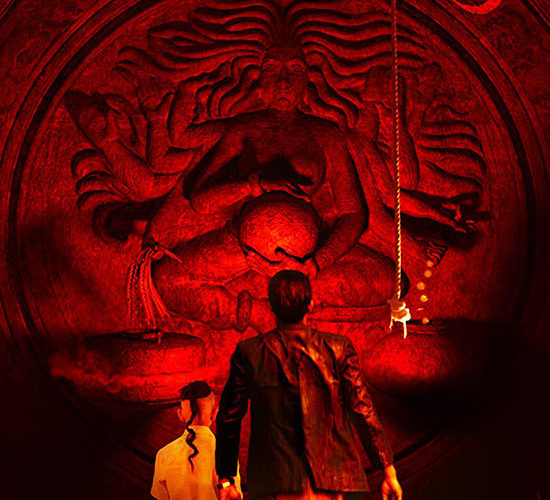 |
| Tumbbad (2018) |
Then came an Indian film which blended cosmic horror with mythology – Tumbbad. The inspirational story of Tumbbad by Narayan Dharap was itself an inspiration of Lovecraft’s stories. Rahil Barve blended it with Indian mythological tropes and created a masterpiece. While I didn’t find the movie that scary, its visuals, tropes and thoughts still haunt my dreams even a decade later. Cosmic horror is yet to be turned into a parody, because we still don’t understand it that well.
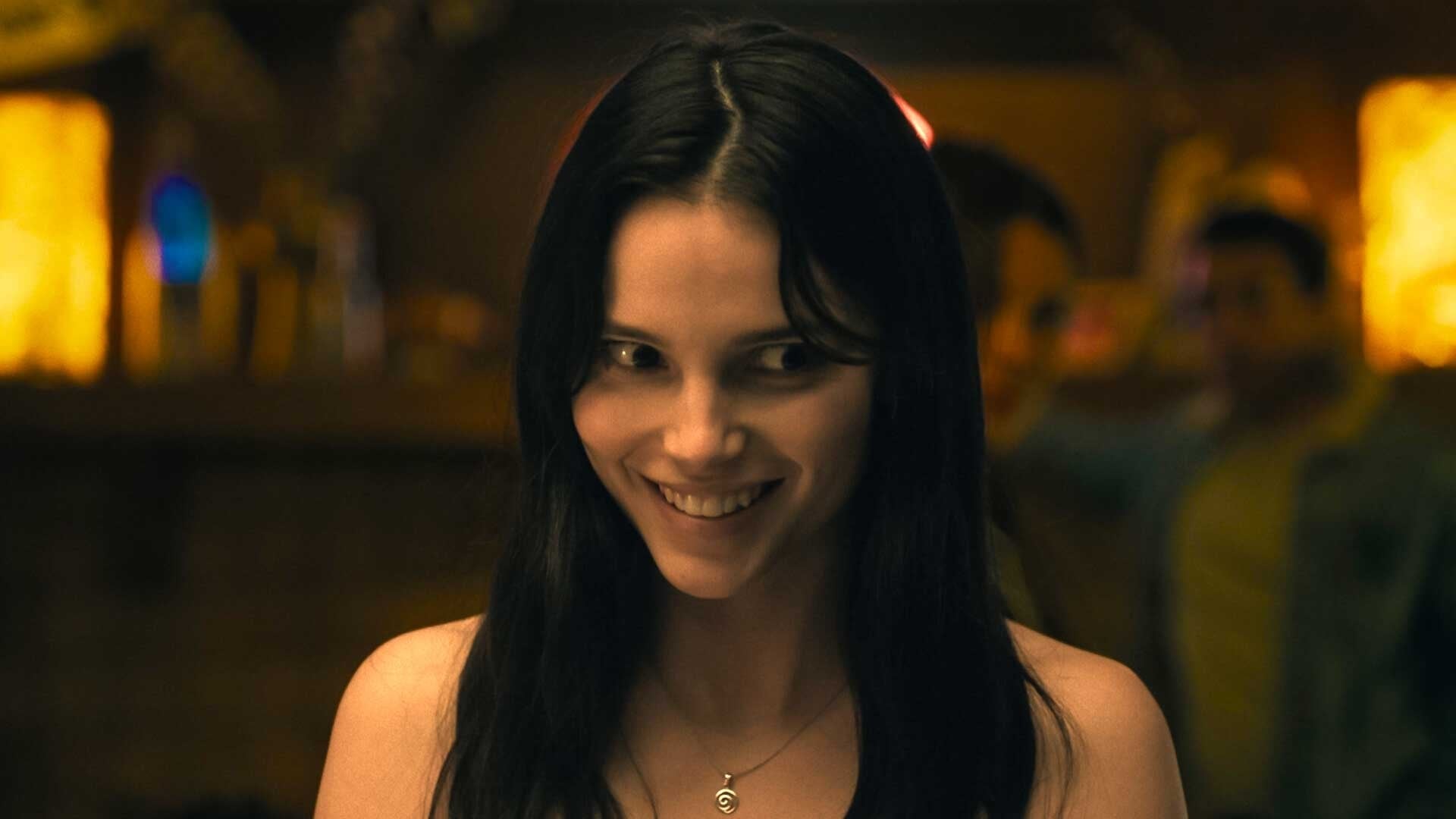 |
| The Creepy Obsessive Girlfriend |
Obsession – Subverting the Tropes
Now, let’s return to Obsession.
Here’s what they did differently.
1. Obsession subverted the usual
tropes
Now, in a general horror film,
the theme and tone of the movie begin with a creepy world, and characters live
in this creepy place or enter a creepy place. The triggering object comes from
this creepy space – a haunted house, a graveyard, or something that is eerie.
Something you would think before entering. But Obsession makes the eerie part
of normal life. The One Wish Willow does not come from a gypsy seller in the
middle of nowhere; it comes from a usual gift shop that looks natural and feels
natural. Even the vendor speaks about it as if it’s a usual product. There is
no demarcation between normal and abnormal.
2. Relatability through exaggeration
of the normal world
Since there is no demarcation
between the normal and the abnormal, it brings in a real relatable trope –
Obsessive girlfriend. The horror film is literally an amplification of how a
guy would experience if he had an over-obsessive and controlling girlfriend.
While here it makes it supernatural, the base fear and emotion is derived from
something real.
3. Acting, Cinematography, Lighting,
Editing & Direction
Of course, none of this would have worked without the brilliant and unreal acting by Inde Navarrette, not to take away from the other cast. Use of minimal VFX, grounded filmmaking, and playing with shadows and lights made it feel more real.
Obsession can be the beginning of
a new genre – where the abnormal blends with normal, blurring the natural with the supernatural.

Comments
Post a Comment